.jpg?w=702&auto=format%2Ccompress&quality=85)


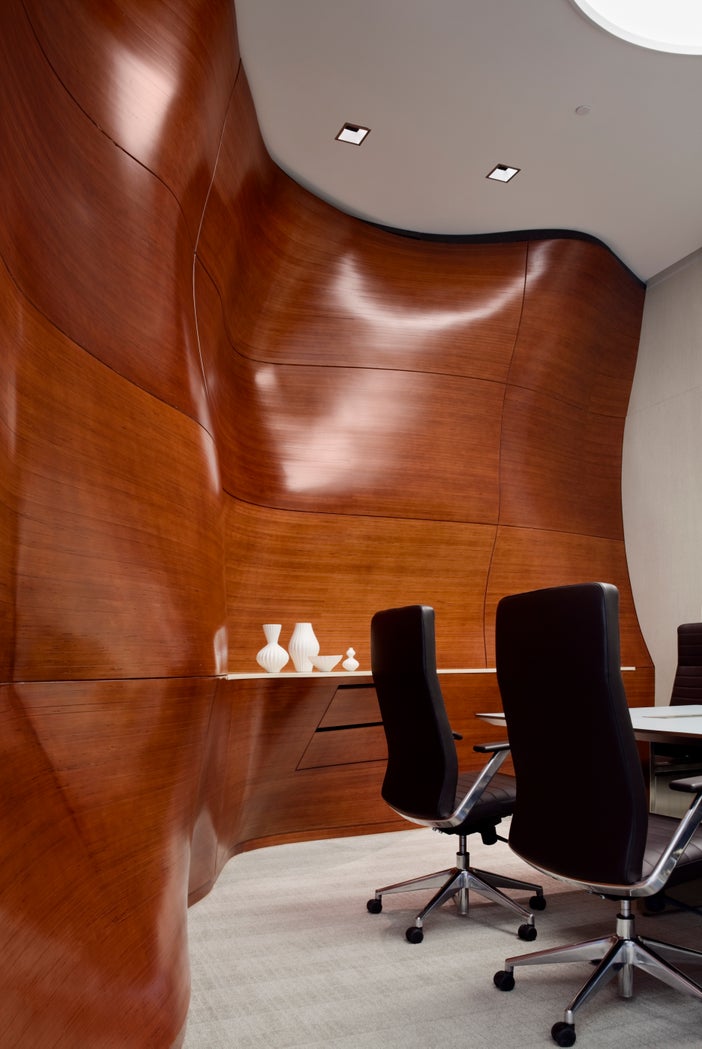
Healthier interiors without sacrificing design. That was the north star for the Executive Dean’s Office renovation at Parsons School of Design in New York City—a commercial interior renovation that proves you can prioritize indoor air quality, material transparency, and long-term durability while still delivering a refined, contemporary workspace.
Project: Executive Dean’s Office renovation
Location: New York City (Parsons School of Design)
Timeline: 2019–2021
Partners: Healthy Materials Lab; Jordana Maisie Design Studio
Primary goal: Healthy office design with reduced toxic exposures
Key material: PureBond® formaldehyde-free plywood
Key strategy: Mechanical fastening to reduce adhesives and improve repairability
Explore the material used in this project: PureBond® formaldehyde-free plywood
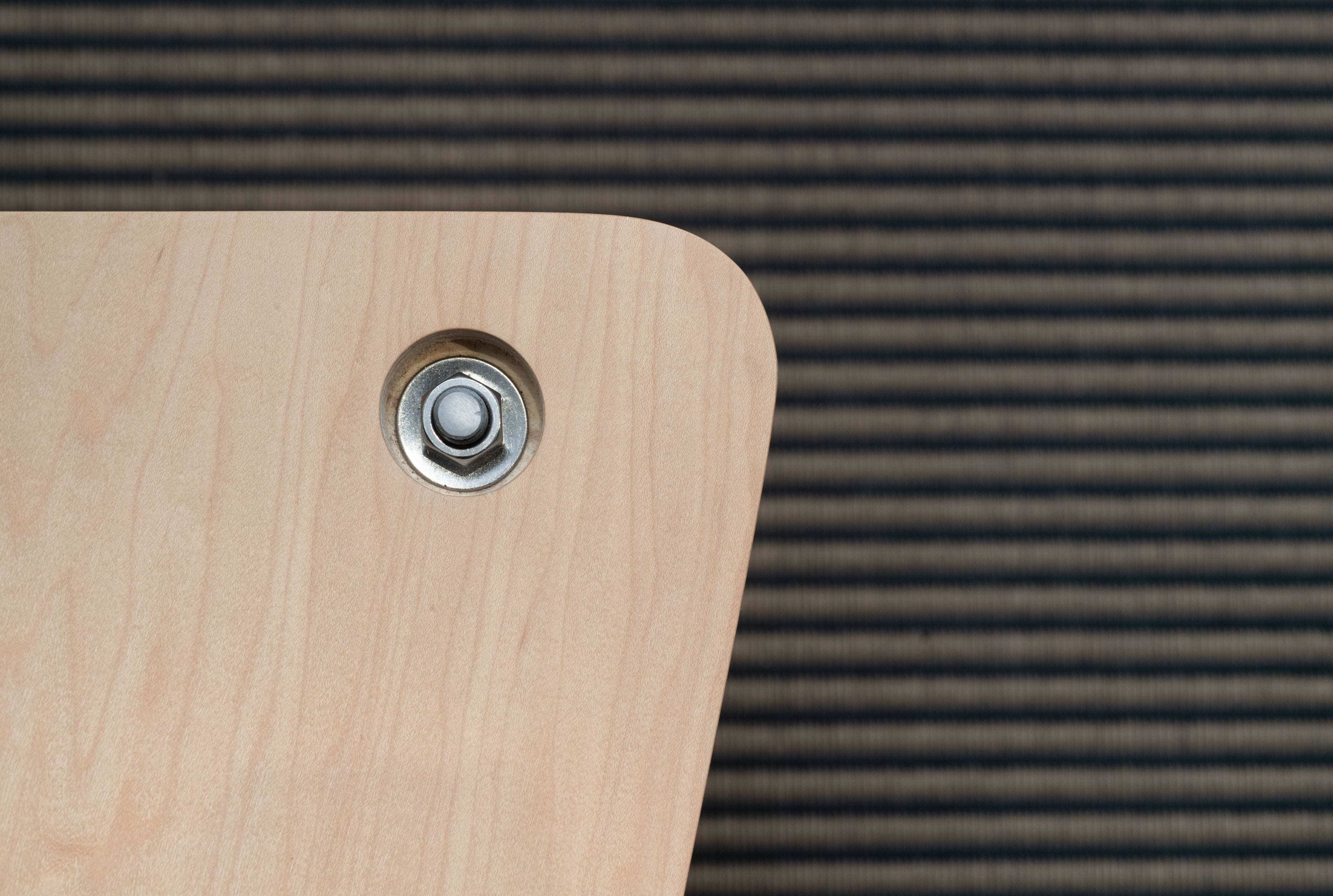
One of the most compelling—and replicable—details in this renovation is the emphasis on mechanical fastening in the custom furniture and built-ins. Instead of relying heavily on laminations, contact cements, and broad-surface gluing, components were designed to be assembled with screws, bolts, clips, and other demountable connections wherever practical.
That choice matters for both performance and health. Reducing adhesive use can help limit added chemicals and potential VOC sources during fabrication and after installation—an important consideration when the goal is a healthier office interior. Mechanical fastening also supports cleaner detailing and future flexibility: panels and assemblies can be adjusted, repaired, refinished, or replaced with less disruption, which helps extend service life and reduce waste over time.
In a commercial interior renovation setting—where maintenance, reconfiguration, and durability are real-world requirements—this approach turns a “healthy materials” goal into a practical construction strategy, pairing the benefits of formaldehyde-free plywood with a build method that can reduce reliance on wet-applied products.
Next steps for specifiers: Request samples or download technical docs.
Credit: Jordana Maisie Studio & Jonsara Ruth
Healthy Materials Lab | Healthier Interior Renovation: Parsons’ Exec. Dean’s Office
PureBond® is made with a soy-based, no-added-urea-formaldehyde (NAUF) technology designed to avoid added urea-formaldehyde in the panel, making it a popular option when you’re looking for formaldehyde-free plywood for healthier office interiors.
Start with material transparency and prioritize lower-emitting products, then pair those choices with durable detailing and a finish strategy that meets the design intent. This project shows that healthy office design can be achieved through smart specifications (like formaldehyde-free plywood) plus construction decisions that support longevity and maintenance.
Adhesives can contribute to chemical exposure during installation and may introduce additional VOC sources. Using mechanical fasteners where feasible can reduce adhesive reliance, simplify repairs, and make future modifications easier—especially helpful in a commercial interior renovation environment.
Explore more innovative projects and design solutions.
Whether you're a large contractor or a DIY hobbyist, Columbia Forest Products are conveniently available throughout North America. Find your wholesale distributor or Home Depot store here!